Cart (0)
Your cart is empty
Looks like you haven't added anything yet... Let's get started!
Continue Shopping
Your cart is empty

A beach cover-up is an essential part of a summer wardrobe, combining practicality and style. It becomes the perfect complement to a swimsuit, creating a complete look for seaside relaxation.
The main purpose of cover-ups is to provide comfort during beach outings, especially when stepping away from the water or strolling along the promenade. A cover-up helps you feel confident and stylish. It’s easy to throw on over a swimsuit and quick to remove before a swim.
Sun protection becomes especially important on hot days. A cover-up creates an extra barrier between your skin and UV rays, allowing you to enjoy the sun without the risk of sunburn. Lightweight fabrics provide cooling and comfort even in the hottest weather.
In addition, it’s a stylish element of a beach outfit that transforms an ordinary swimsuit into an elegant look. A cover-up allows you to experiment with styles, create different moods, and highlight your individuality.
A pareo is considered a classic type of cover-up originating from the tropical islands of the Pacific Ocean. It’s a rectangular piece of fabric that can be worn in dozens of different ways. Its simplicity is its greatest advantage for creating various looks.
The versatility of a pareo makes it an irreplaceable accessory for any trip. You can tie it as a skirt, dress, top, or even use it as a beach mat. One pareo can replace several items in your suitcase and lets you create new outfits every day.
A tunic is distinguished by its cut and comfort, making it ideal for active beach days. It has a loose silhouette that doesn’t restrict movement and ensures all-day comfort. A tunic is easily pulled over the head and doesn’t require complex tying.
Different lengths and styles let you choose the perfect option for any body type. Short tunics highlight the legs, mid-length styles create an elegant silhouette, and long ones add mystery to the look. Sleeves can vary in length or be entirely absent.
A kaftan draws attention with its loose silhouette and wearing comfort. It gives an effortless luxury effect and suits those who value comfort above all. Its wide cut allows you to wear it over any swimsuit without restriction.
The design of kaftans is often inspired by various cultures of the Black Sea region, creating unique blends of tradition and modernity.
Light beach sundresses are designed specifically for relaxing near water. They are made from fabrics that dry quickly and retain their shape after contact with saltwater. A sundress easily transitions from a beach look to a walk-ready outfit.
Options with straps or strapless allow you to choose the most comfortable way to wear it. Thin straps accentuate the shoulders and neckline, wide ones provide extra support, and strapless models create the most open look for sunbathing.
Eastern style on the beach brings a touch of exotic charm and mystery. A kimono combines traditional cut with modern materials, making it a unique accessory for your beach wardrobe. It adds sophistication and elegance to your outfit.
Wide sleeves and ease of wear make a kimono the perfect choice for those seeking a balance between style and comfort. The sleeves provide extra sun protection, while the loose fit allows the skin to breathe even in hot weather.
Choosing the right cover-up depends on your swimsuit style and the look you want to create. One-piece and two-piece swimsuits require different approaches to matching a cover-up, and it’s important to consider these nuances.
With a monokini, it’s important to preserve the overall silhouette. A short tunic nicely emphasizes a slim figure, adding lightness. A pareo tied at the hips adds softness and femininity. If you want something more refined, a light kimono with a belt highlights the waist and creates an elegant shape.
A two-piece swimsuit gives you more freedom to play with the form of the cover-up. You can experiment with the balance of open and covered areas. A long kaftan balances the openness of the upper body, while a short sundress draws attention to the legs. A pareo worn as a skirt allows the top of the swimsuit to remain visible, creating a light, relaxed look.
The color of the cover-up also matters. If the swimsuit is bright or patterned, it's best to choose a solid-colored cover-up that won’t overload the outfit. For a plain swimsuit, patterned cover-ups add visual interest. Contrasting colors help create a striking look, while similar shades lend sophistication and harmony.

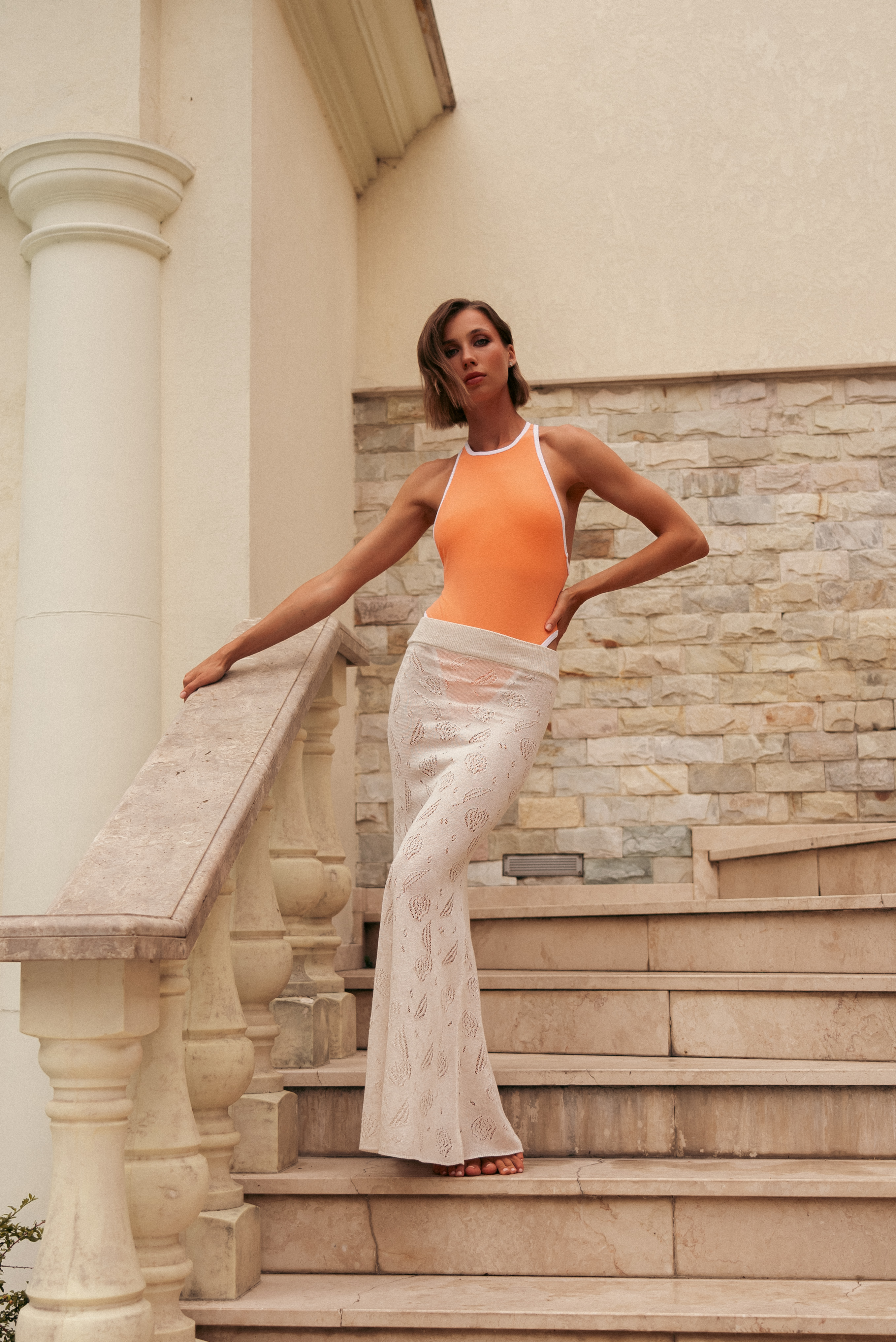
The fabric of a cover-up directly affects how comfortable it is to wear and how it looks after several seasons. In beach conditions, it’s important to consider not only the appearance but also the practicality of the fabric.
Linen is the ideal choice for hot weather. This natural fabric breathes well, evaporates moisture quickly, and provides a feeling of freshness. It suits those who appreciate natural ease and a relaxed style. Over time, linen becomes softer and develops a unique character, adding to its charm.
Viscose is made for soft draping and graceful lines. It feels pleasant on the skin, glides easily over the body, and has a light cooling effect. Thanks to these qualities, viscose is perfect for kimonos — where a smooth silhouette and elegant fabric fall are especially desirable.
Polyester is a practical choice for active recreation. It doesn’t wrinkle, dries quickly, and retains its shape even after many washes. This fabric is resistant to UV rays and doesn’t fade, making it convenient and durable even in tough beach conditions.
One cover-up — many looks. The main thing is to know how to wear and combine it properly. This is a real art that helps you look stylish every day, even on the beach.
A pareo is a versatile piece you can play with however you like. Tie it at the hips for a skirt. Tie it around the neck for a light dress, or under the arms for a top. You can invent asymmetrical styles, experiment with knots, and create something unique for every mood.
For a leisurely stroll along the promenade, a light kaftan or tunic is a great option. For active fun, it’s better to choose a short, comfortable cover-up that doesn’t restrict movement. And in the evening, when you want a more refined look, focus on the details — add beautiful earrings, a bag, or a belt.
To make sure your cover-up lasts and keeps its appearance, it’s important to care for it properly. Sea air, salt, sun, and sand — all of these affect the fabric, so a slightly special approach is needed.
After swimming in the sea or pool, rinse the cover-up right away with cool fresh water. Salt and chlorine can damage the fibers, so it’s best not to delay. And never leave wet fabric to dry in the sun — this causes stains, fading, and fabric distortion.
It’s best to wash it gently. If using a machine, choose a delicate cycle with cold water only. Use mild detergents without harsh chemicals. Linen is best washed by hand as it’s more delicate. Synthetic fabrics can go in the machine, but ideally inside a mesh laundry bag.
Before storing the cover-up in your closet, make sure it’s completely dry. Damp fabric is the perfect environment for mold and unpleasant odors. Linen garments are better stored on hangers — that way they don’t wrinkle and keep their shape.
To maintain bright colors, keep your cover-up away from direct sunlight when not in use. Sunlight gradually "burns out" dyes. And don’t forget to use products made for colored fabrics — they really help preserve shades just as vivid as the day you bought them.
A truly stylish beach look is when all the elements work together. And the cover-up often becomes the very detail that ties together the swimsuit, accessories, and mood into a unified whole.
To make the combination look harmonious, it’s important to maintain balance. If the swimsuit is bright and patterned, it’s better to add a simple, solid-colored cover-up — it will "calm" the look. On the other hand, a classic black or white swimsuit pairs beautifully with something printed — this adds an interesting accent. You should also pay attention to color temperature: warm tones pair best with other warm tones, and cool with cool.
Accessories are the final touch. If you want a light, natural mood — a straw hat, woven bag, and minimal details work perfectly. For more glamour, go for metallic jewelry, large sunglasses, and shiny accents. As for footwear — long cover-ups look great with flat sandals, while short pareos go well with flip-flops or light sandals.
You should also consider the type of vacation. For a family day at the beach, it’s best to choose practical tunics or kaftans — they’re comfortable, easy to put on, and cover the shoulders from the sun. A romantic getaway calls for something delicate: lace, sheer fabrics, or silky textures. For active holidays, a short, lightweight cover-up is the way to go — it won’t restrict movement and dries quickly.
So, if you were wondering what a swimsuit cover-up is, what it's called, and how to make it part of a stylish outfit — now you know where to begin.